- info@hopeplusivf.com
- 3rd floor, SS Tower, Service Rd, beside Ishan International Girls School, Ramjaipal Nagar, Patna, Bihar 801503
In fertility treatment, a number of steps are being done inside the laboratory. These steps may not be visible to patients, but they play a major role in the treatment process. One such important step involves preparing biological samples. At Hope Plus IVF, a centrifuge machine is used to support this stage with accuracy and controlled handling.
This machine is mainly used to separate different parts of a sample. It works gently but effectively, ensuring that the required cells are prepared properly for further procedures. Since lab samples are sensitive, even small mistakes can affect the next stage of treatment.
A centrifuge machine, often called a sperm washing centrifuge, is a laboratory device that spins samples at a controlled speed. When the sample spins, its components separate based on weight and density. Heavier elements move to one side, while lighter fluids stay apart.
In IVF laboratory work, this machine is commonly used during sperm preparation and other sample processing steps. The speed and time of spinning are carefully set so that the sample remains safe and usable. The process is handled by trained lab staff who monitor each cycle closely.
During fertility treatment, samples must be clean and well prepared before they are used. Raw samples often contain extra fluid, weak cells or unwanted material. These need to be removed before fertilization or related procedures.
The centrifuge machine helps achieve this separation. By doing so, it allows embryologists to work with a more refined and usable sample. This reduces stress on the cells and supports accurate lab work. Because of this, specialists can focus on the treatment process rather than repeated sample handling.
One of the main benefits of a centrifuge machine is accuracy. The separation process is controlled and consistent. This helps maintain sample quality throughout preparation.
Another benefit is time control. The process is quick, which helps maintain sample stability. Less manual handling also reduces the risk of contamination. The machine works smoothly and supports a clean laboratory environment.
Modern centrifuge machines are designed to operate quietly and safely. Alert systems and balance controls help avoid errors during operation. This adds another layer of safety to lab procedures.
After sample collection, the material is placed into sterile tubes. These tubes are then positioned inside the centrifuge machine in a balanced manner. Once the machine starts, it spins for a set duration.
During spinning, the sample separates into visible layers. After the process ends, the required part is carefully collected for the next stage of treatment. This step is performed with attention and care to maintain sample integrity.
At Hope Plus IVF, the centrifuge machine is used as part of a responsible and well-managed laboratory process. Every step is handled with focus, cleanliness and accuracy. The aim remains to support accurate sample preparation and maintain consistency during fertility treatment.
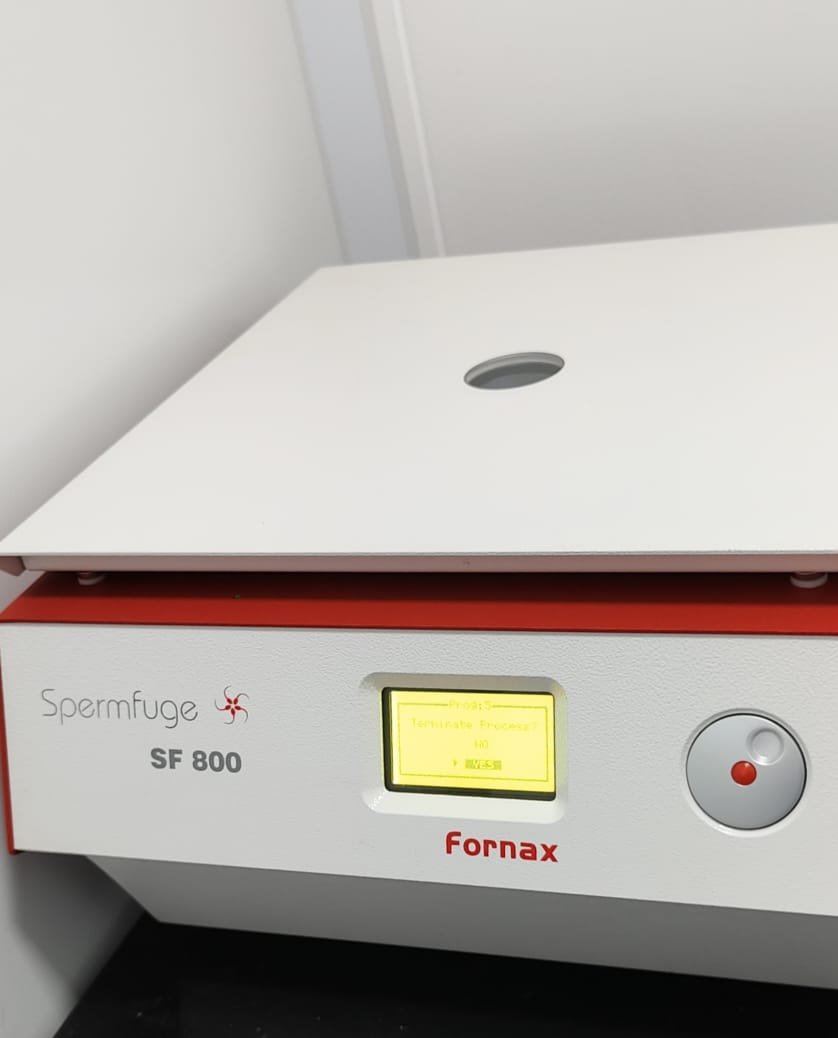
Accurately separates sample components based on density, ensuring clean preparation of sperm and other biological materials for IVF procedures.
Gentle spinning action protects delicate cells while effectively removing unwanted materials, maintaining sample integrity throughout preparation.
Quick processing reduces sample exposure time, helping maintain cell viability and supporting timely progression through treatment stages.
Semen or other biological samples are collected in sterile containers under controlled laboratory conditions.
Samples are transferred to sterile centrifuge tubes with appropriate media, ensuring proper volume and balance.
Tubes are placed in balanced positions and spun at precisely controlled speeds for optimal separation.
After spinning, samples separate into distinct layers based on density, with viable cells concentrated appropriately.
The required layer is carefully extracted and prepared for fertilization or further laboratory procedures.
